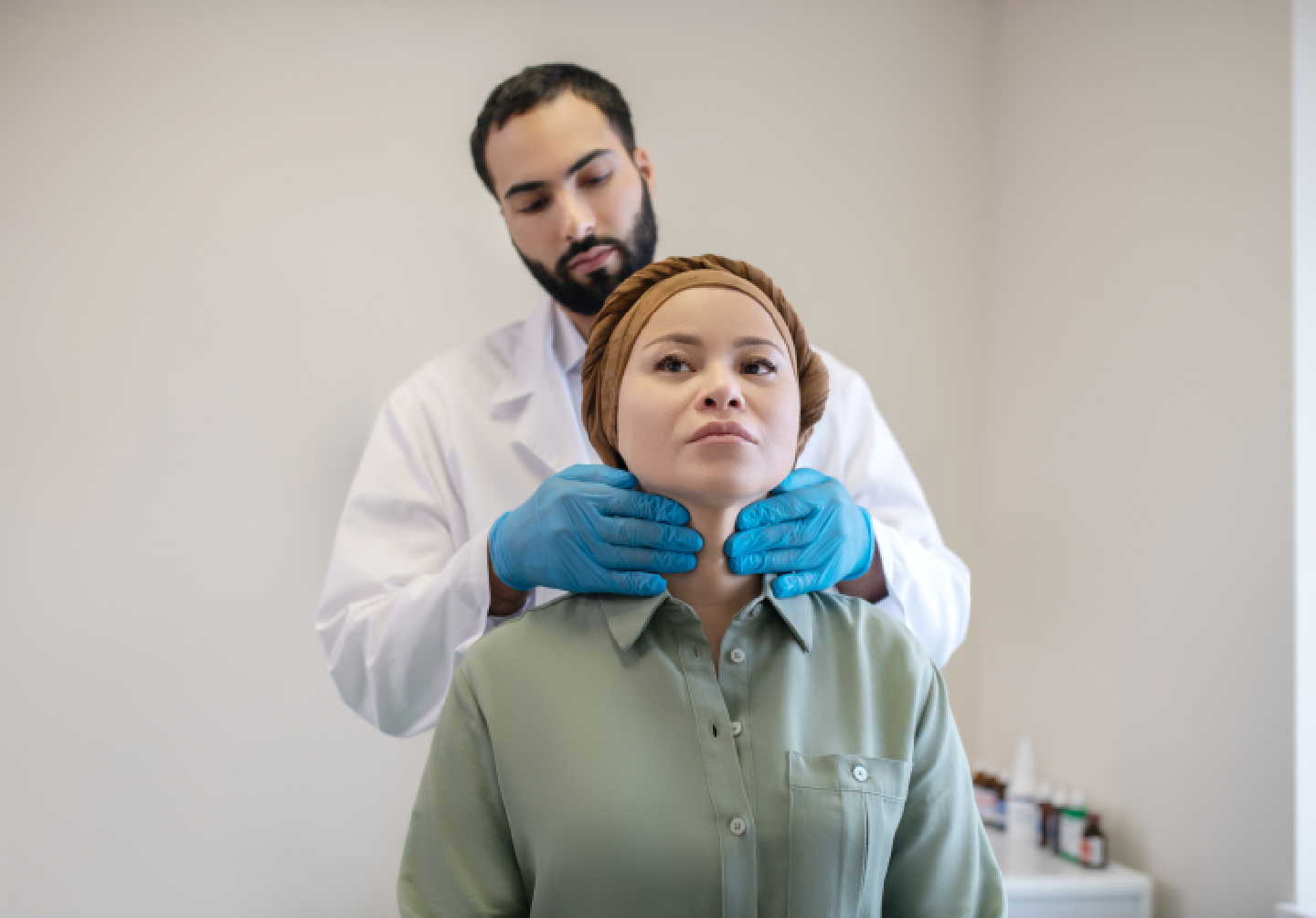
What Is Head & Neck Surgery?

Head and neck surgery focuses on the diagnosis and surgical treatment of tumors and abnormalities involving the face, neck, skull base, salivary glands, thyroid, parathyroid, and throat. These conditions can range from benign cysts and nodules to complex cancers. Timely evaluation and specialized care are crucial for enhancing both survival rates and quality of life. Dr. Basheeth utilizes cutting-edge techniques, including robotic and minimally invasive approaches, to provide the highest level of care.

Key Benefits of Head & Neck Surgery

Patients seeking expert care for head and neck conditions under Dr. Basheeth can benefit from:

  • Accurate diagnosis and early detection of cancerous and non-cancerous tumors
  • Surgical precision for better cosmetic and functional outcomes
  • Preservation of important structures (nerves, vessels, voice box)
  • Reduced post-operative complications with advanced techniques
  • Multidisciplinary support for complex cancer management

Understanding Head & Neck TumorsWhy Seek Early Treatment?

As we grow, our ear, nose, and throat systems undergo many changes—especially during childhood and later in life. Children may experience recurrent infections, delayed speech, or breathing issues due to enlarged tonsils or adenoids.

In adults, environmental factors, allergies, chronic inflammation, and aging can lead to sinus problems, nasal obstruction, or hearing loss. An ENT specialist like Dr. Naveed Basheeth identifies the root cause of such issues early and provides targeted care, helping patients maintain long-term comfort, communication, and quality of life.

“Dr. Basheeth was incredibly kind and knowledgeable. I felt confident in his hands from day one. Thank you for making a tough process easier!”

Head & Neck Patient, New Zealand

Head & Neck Surgery Procedures

Head & Neck surgeries vary depending on the tumor’s type, location, and extent. Dr. Basheeth commonly performs:

  • Thyroid and Parathyroid Surgery:Thyroid and Parathyroid Surgery
  • Salivary Gland Surgery:For parotid, submandibular, or minor gland tumors while preserving facial nerve function
  • Laryngeal and Pharyngeal Tumor ExcisionTreating vocal cord lesions, throat cancer, or swallowing issues
  • Neck Dissection:Removal of lymph nodes when cancer spreads
  • SialendoscopyA minimally invasive technique to treat salivary duct obstructions
  • All procedures are tailored for safety, optimal oncologic results, and minimal cosmetic impact.

Am I a Candidate for Head & Neck Surgery?

You may be a suitable candidate for Head & Neck Surgery with Dr. Basheeth if:

  • You have a lump, swelling, or lesion in the head or neck
  • You’ve been diagnosed with thyroid, salivary, or throat tumors
  • You have difficulty speaking, swallowing, or breathing
  • A biopsy or scan shows suspicious masses
  • You’re seeking second opinions or advanced surgical expertise
  • You are in reasonably good health and understand the procedure, risks, and outcomes

Recovery and Results

Recovery varies depending on the type of surgery, your overall health, and whether additional treatments like radiation or chemotherapy are necessary. Most patients are able to return home within 1 to 3 days after surgery. It’s common to experience temporary soreness, mild swelling, or changes in voice, which typically improve over time. Pain is usually manageable with prescribed medications, and most patients report gradual improvement each day.

Proper incision care is essential for healing. Dr. Basheeth places incisions in discreet, cosmetically thoughtful areas to minimize visible scarring and promote better recovery outcomes. Patients are encouraged to keep the incision site clean and dry, follow specific wound care instructions, and avoid strenuous activity initially. Light activities such as walking or household tasks can typically resume within 1 to 2 weeks, while a full return to regular routines may take 3 to 6 weeks.

In cases involving cancer, further treatment may be needed and is coordinated closely with an oncology team. This may include radiation, chemotherapy, or targeted therapy, depending on the diagnosis. Regular follow-up visits are important to monitor healing and assess the success of the surgery. If needed, additional support such as speech therapy, swallowing rehabilitation, or nutritional counseling will be provided to help restore function and improve quality of life.


Types of Head & Neck Conditions Treated

Dr. Basheeth is experienced in managing a wide range of conditions, including

Thyroid & Parathyroid Disorders

Goiter, thyroid nodules, overactive thyroid, and thyroid cancer Hyperparathyroidism and parathyroid adenomas

Salivary duct stones and chronic infections

Parotid and submandibular gland tumors

Throat & Larynx Conditions

Vocal cord nodules, cancer, or polyps Hoarseness, voice loss, and airway obstructions

Neck Masses & Lymph Node Disease

Cysts, congenital neck lumps, metastatic cancer nodes Neck dissection for cancers

Skull Base & Complex Tumors

Robotic and endoscopic approaches for difficult-to-access areas

Head & Neck Surgery FAQs

Is Head & Neck Surgery always cancer-related?

Will I have visible scars?

Is ENT surgery painful?

Is robotic or minimally invasive surgery an option?

How do I prepare for surgery?

What happens if my tumor is cancerous?

How long does recovery take?

Is Head & Neck Surgery always cancer-related?

No, many procedures are for benign (non-cancerous) tumors or functional issues like blocked glands or voice disorders.

Will I have visible scars?

Dr. Basheeth takes care to place incisions in natural creases or behind the hairline. Most patients heal with minimal visible scarring.

Is robotic or minimally invasive surgery an option?

Yes, where suitable. Dr. Basheeth is trained in advanced techniques like robotic surgery, Sialendoscopy, and endoscopic approaches.

How do I prepare for surgery?

Pre-op tests, scans, and sometimes biopsies are required. You’ll receive specific instructions on fasting, medications, and aftercare.

What happens if my tumor is cancerous?

Dr. Basheeth works with oncologists and radiologists to form a comprehensive treatment plan, including surgery, radiation, or chemo if needed.

How long does recovery take?

Most patients resume light activities in 1–2 weeks and fully recover in 3–6 weeks. Complex surgeries may take longer.

Do men and women both get head & neck tumors?

Yes, although certain cancers are more common in males due to risk factors like smoking or HPV. Both genders benefit from early screening.

Why Choose Dr. Naveed Basheeth?

Dr. Naveed Basheeth is a dual-trained Consultant ENT, Head & Neck, and Facial Plastic Surgeon with extensive international experience across India, Ireland, the UK, Canada, and New Zealand. He holds numerous fellowships and certifications, including FRCS (ORL-HNS), FEBORL-HNS, FGOLF (IFHNOS/MSKCC), and CCT (UK & Ireland).

Dr. Basheeth is renowned for:

  • Patient-first, compassionate care
  • Evidence-based, advanced surgical techniques
  • Excellent oncologic and cosmetic outcomes
  • Robotic and microvascular expertise
  • Close collaboration with multidisciplinary teams
  • For expert head and neck care in New Zealand, schedule your consultation with Dr. Naveed Basheeth today.
Referral Pathway: We provide online consultations within two weeks of referral for out-of-town residents. Relevant investigations, radiological and laboratory, can be undertaken in the patient's city. Private and outsourced referrals can be sent to: admin@entcentral.co.nz (347) 557-8368.
Contact Us